Tuesday, October 13, 2009

I miss youse

It feels weird not blogging. I know it's weird to feel weird for not blogging. And I'm so busy I don't know what to do. You know that feeling? I just keep making lists and ticking off the really small things - "put bins out" - tick. By the time the babies are abed and dinner is over, I only have an hour and a half each evening - from 8.30 pm til 10 - to work on changing Queensland.

I'll be over at the campaign blog for a few more weeks yet. They tell me it should be presented to Parliament then go to the vote by the end of November.

I've made this - it's part of the campaign, but I thought you might like it.

Where did I come from 2 on Vimeo.

Monday, September 07, 2009

It'll only take a minute...

Now, I'm starting a campaign blog at www.ozrainbowfamilies.wordpress.com

It'd be lovely if you could come over and post a comment, just to give the impression that it's a thriving campaign with lots of support.

The witch (that's me) and the wardrobe

My energy is somewhat better than at my last post; thanks for all your encouraging comments.

By the time the babies are abed, we've cooked dinner and cleaned up it's 8.30 - that only leaves me an hour and a half a night to change the world! so this will be a quick entry.

I've been thinking a bit about closets. In my talking with people about the same sex parenting issue, I've come across four people so far who've said, "Oh, I couldn't write a letter of support, someone might realise I'm gay".

I just don't get closets. Well, I get them in Afghanistan or somewhere my very life would be at risk, but why would one choose to live in a closet in Australia?

Okay, one woman was, ahem, older. She said, "I've worked for this [charitable] organisation for thirty years. I don't want to leave in a cloud of disgrace."

So sad, and she's probably totally misreading her organisation (but who knows?) but I do get people who are older being closeted. They've come from a different era. It's the people who are more my age that I don't understand.

Reasons seem to be either career (I'll lose my job) or family (it would just kill my mother) related.

To the first one I wonder - How much would I have to get paid to stay in the closet? To say,"yes all you straight religious freaks are right, I should hide who I really am so I don't upset you"? Maybe if I was an international multimillionaire movie star I'd be tempted to keep it quiet if it would jeopardise all those villas in the South of France.

To the second one: have there actually been any recorded cases of people dying from someone telling them they are gay? My parents and I didn't talk for three years after I came out, but they came around in the end, and now (twenty years later!) they're great. I suppose the point for me is that even if they hadn't come around, I think I would have survived. I couldn't skulk around pretending to be something I'm not. It must just be shattering to one's self esteem.

I was talking to a new gay male friend about it - musing on how closets seem to be much more prevalent in Queensland. Maybe because the "gay community" (such as it is) is smaller, I come across a wider range of people than somewhere like Melbourne where it's easier to find a whole crowd of like-minded types. He was saying he had a rule for himself now - no dating closets. "Sometimes they're really cute," he said, "but it's so insulting to be introduced as 'my friend from work' - and even worse to be co-opted into going along with it".

Now I'm not a psychologist but I live with one so that qualifies me to be able to come up with theories. So theory 1 is that people who are closeted a) have parents who are disapproving and b) haven't worked through that stage of development where you realise your parents are not right about everything.

I mean, it's hard to imagine that someone who is closeted would have loving, accepting parents, isn't it? To be the sort of person who is closeted, you must have got a lot of messages that you are not okay. And then, there's a stage in adulthood where you realise that your parents will not agree with everything you do, and that is okay. You are okay, despite their disapproval.

And why are closets bothering me so much, at this time when I am being more out than I have ever been before - Queensland's representative lesbian mother? Because when I meet a person who is closeted, who feels ashamed of themselves for being gay, who feels that others would reject them if they knew they were gay - well I suppose it triggers the same feelings in me.

I also get cross with them, especially at times like this. Here's a low risk thing you can do to support gay rights! What are you waiting for? Us to get the rights for you? It's your struggle too! By staying silent they're just perpetuating the discrimination. It's like black people saying, "oh no sirree, I'm not gonna go for any rights, not me. Doan wanna upset the massah".

Ah well, it'd be best to avoid the closets then. Don't want to face any dark feelings now!

On with the job!

Wednesday, September 02, 2009

Flagging energy

I'd really like to keep a record of our campaign trail, but I'm sooooo tired.

We're at a crucial time in Queensland - the Premier has announced her intention to recognise same sex parents, and now there's a Community Consultation (what new information are they going to learn from that? you may ask) and then there will be a vote.

The Opposition leader has vowed to defeat it.

I've got a facebook group, a yahoo group, and I'm keeping two other lesbian mum mailing lists posted (trying to get them interested - no response so far)

It's disheartening so far.

I hope someone else gets involved in writing letters.

I'm trying to think generously about other people - reminding myself of all the causes I hear about and don't do anything about, even though I support them.

If Queenslanders are reading, you have until September 18 to write to the Department of Justice.
You can read the consultation documents here
and you just send an email here legalpolicysubmission@justice.qld.gov.au

Apparently the anti-same sex marriage groups sent in 10,000 submissions - that was federal, but still, they're pretty active. The pro-same sex marriage mob sent in 12,000, yay us. I was a tardy contributor to that, feeling ambivalent about marriage as a whole, but in the end thought the symbolism of the inequality was more powerful than making (or not) a point about the inappropriateness of marriage as a foundation stone for society.

(My general enthusiasm, optimism and will to live may currently be influenced by Pearl being quite ill and crying for ohh, three days straight now, pretty much the whole time when she's not sleeping. It's quite mentally exhausting. Louis is getting fed up with playing quietly at my feet while I rock her and tonight started shouting in quite a demanding, teenage fashion - MUM! MUM!)

Yes, I am aware this post is fairly incoherent.

Thursday, August 20, 2009

Can you help me destroy the fabric of society?

I know, I know, where have I been? But now I am in the centre of a media storm, it's that exciting, and I need your help to work this out, so please comment...

The government has announced plans to recognise same sex parents here in Queensland. Yesterday L & I were on the local TV news (I'm trying to get a copy) and in the main rag here, and today I wrote an opinion piece, sharing the page with a family-values type.

Now a current affairs show is proposing a 'discussion' with people with different perspectives, including us. L is not so sure this is a good idea - that it will just validate the loopy fringe groups. I'm wondering whether it would be useful to be there, and come across as normal.

Their reasons why we bad are always predictable - I need to be clear on what I think in response, even if I don't actually say them.

I am trying to hold onto the idea that we are all concerned with the best interests of the child.

Reasons most commonly cited why we shouldn't have children:

- The Great Sky Fairy says it's wrong (aka 'Adam and Eve not Adam and Steve')
As I don't believe in this version of the Great Sky Fairy, this argument is irrelevant so I am not going to argue verse for verse, although I could. As we are a secular state, it is also irrelevant to lawmakers. Although I really try to resist the temptation of getting into a theological argument, I am sorely tempted to point out that if you believe in a God that made Adam, you must also think S/he made Steve.

- It's not normal/natural
Actually it is normal, it's just not positioned at the centre of the bell curve. Normal - naturally occurring - is different to common.

- We don't need to pander to the desires of a minority
I would say that how we treat our minority groups is a measure of us as a society

- The children will be bullied
Umm, and when did your child bullying my child become a reason for me not to have children?

- The children need the complementary love of a man and a woman
Children need loving men and women in their lives. I think it would be unhealthy for the parents to be the only role models in any family. The nuclear family is a modern invention, and perhaps not so relevant to many gays and lesbians, who form strong interconnected communities in the absence of biological connections. Good parents can find an abundance of positive role models of many different ages, races, abilities and interests

-The traditional family will collapse
Assuming this is a bad thing (because it would just be too mind-boggling to consider that perhaps the 'traditional' ie current Western family structure is not the best or even only way to bring up children), how exactly will that collapse happen?

- It's just sick and disgusting and I don't like it
Yeah, sorry about that. There will be things you don't like in the world.

Have I missed any general themes?
What would you say in response to them?

Monday, July 27, 2009

It's funnier if you say it out loud

I find it endearing when people can't spell. Dad, whose first language is not English, is an appalling speller. I have to read his letters aloud so the phonetic renderings make sense. L, despite being exceptionally clever, can't spell. So here's another dad-ism, repeated with the greatest affection:

Dad: 'Where should I get off the train?'
Me: 'Yer*****ton
Dad: 'Hang on, I'll write it down...how do you spell it?'
Me: 'Y...'
Dad: 'Y for William?'

Wednesday, July 08, 2009

Qld: Same sex parenting briefing paper

Just FYI.
If I knew how to do a fold, I would (any tips?) It's quite long.

******


Action Reform Change Queensland (ARCQ) is a community-based organisation in Queensland which advocates for lesbian, gay, bisexual and transgender equality through campaigns for legal and social change, and public education. ARCQ was formed in 2003 with participation from individuals and established community groups.
Key Points
· A significant number of same-sex couples either currently have children or aspire to have children.
· Queensland law does not currently recognise the de facto partner of a lesbian mother as a parent when accessing Assisted Reproductive Technology (ART), in contrast to the way it treats the male de facto partner or husband of a heterosexual mother.
· Extending legal recognition to co-parents in same-sex relationships would ensure they can both perform day to day parenting tasks and fulfill their parenting responsibilities.
· Protecting the best interests of a child is one of the most important principles of international law.
· Research demonstrates that children raised by same-sex couples experience the same developmental outcomes as those raised by heterosexual couples.
· HREOC have found that legal discrimination against people in same-sex relationships and their children amounts to the breach of a number of international human rights obligations.
· Access to a regulated system for altruistic surrogacy should be available in Queensland and should not discriminate between couples on the basis of relationship status or sexuality.
· Adoption, parentage presumption and access to altruistic surrogacy should be available to same-sex couples with the non-biological parent recognised as the child’s parent – reform the Adoption Act 1964, Status of Children Act 1978 and the Births, Deaths and Marriages Registration Act 2003.
· A 2008 Galaxy Poll demonstrates that the majority of Queenslanders support law reform.

SAME SEX PARENTING RECOGNITION IS IN THE BEST INTERESTS OF CHILDREN
Protecting the best interests of a child is one of the most important principles of international law and the Convention on the Rights of the Child (CRC) in particular.
A significant proportion of same-sex couples also parent children. 4,386 children live in same-sex families in Australia (ABS, 2007). This figure does not include children of non-resident or single lesbian or gay parents, or adult children living out of home. It is estimated that 20% of lesbians and up to 10% of gay men are parents. One study has found that 42% of young lesbians intend to have children in the future.
Some children are born to one member of a same-sex couple during an earlier opposite sex relationship. Many children are born to lesbian couples using donor sperm and Assisted Reproductive Technology (ART). Some children are being born into and raised by gay male couples with the help of a female friend or through a surrogacy arrangement. A few children may be adopted by one or both members of a same-sex couple.
Under family law, a child’s two legal parents are generally the woman who bears the child (the birth mother) and the male partner of the birth mother, if there is one (the birth father). These are generally the two people who are recorded on the child’s birth certificate as parents, which will be evidence of the legal relationship throughout the child’s life. In Queensland, this includes the male partner of the birth mother where the pregnancy arises from ART, in that it presumes that the male partner produced the sperm even when there is another donor. Alternatively, if a child has been adopted, the child’s legal parents will include the parents who adopt him or her. Adoptive parents can also be added to a birth certificate.
A child born to a lesbian couple will generally have a birth mother and a lesbian co-mother. The birth mother will be a legal parent under the current family law system. A child born to a gay couple will often have a birth father and a gay co-father, as well as a birth mother. Alternatively, a child may have two gay co-fathers as well as a birth mother. If there is a birth father, he will be a legal parent.
The lesbian co-mother or gay co-father(s) can apply to the Family Court of Australia for a parenting order, as ‘other people significant to the care, welfare and development’ of the child. But the lesbian co-mother and gay co-father(s) will not be treated in the same way as a birth parent.
Extending legal recognition to co-parents in same-sex relationships would ensure they can both perform day to day tasks without question, such as writing permission notes for school, collecting children from childcare or sport, making decisions in relation to their children’s education, taking a child to the doctor and making decisions in a medical emergency. Addressing the legal status of the parents also gives certainty to the children in relation to inheritance and other legal processes that may relate to the death or illness of a parent. Children would further benefit from the legitimising of their family structures afforded by legal recognition
The failure to recognise gay or lesbian co-parents of a child may breach a child’s right to identity under the articles 7 and 8 of the CRC. It may also breach Australia’s obligation to support and promote the common responsibilities of both parents in raising a child (article 18).
In Western Australia (WA), Northern Territory (NT), the Australian Capital Territory (ACT) and New South Wales (NSW), the birth mother and lesbian co-mother of an ART child are presumed to be the legal parents of the child, if they are in a genuine relationship when the child is born. They are both noted on the child’s birth certificate, to the exclusion of the sperm donor. Tasmania allows children in the care of a same-sex couple to be adopted by the non-biological partner. The Commonwealth and Victorian Governments have recently announced that they will make changes to recognise parents. Queensland and South Australia generally do not recognise children parented by same-sex couples. However, section 18B of the Status of Children Act 1978 provides that Queensland recognises lesbian co-mothers as parents if they are registered in WA, NT, ACT and soon in Victoria.
In the case of a lesbian co-mother of an ART child there is unlikely to be a competing interest. In the case of other lesbian or gay co-parents, there may be consensual agreements between the various people seeking to raise a child. The HREOC Inquiry supported amendments to legislation which open up additional options for a lesbian or gay couple to attain legal status and therefore better protect the best interests of their child.
A considerable amount of sociological and psychological research has been conducted over the past 25 years to examine the effect a parent’s sexual orientation has on the welfare and development of their children. The findings comparing lesbian and gay parents to heterosexual parents refute common stereotypes and concerns about lesbian and gay parenting.
It has been clearly demonstrated that the sexuality of a child’s parents has no connection to the child’s moral and cognitive development, well-being or happiness. When comparing children of heterosexual parents to children of lesbians and gay men no significant differences have been found in the social adjustment, social acceptance, or sociability of the children. Nor has any difference in the children’s peer relations such as quality of friendships or popularity been illustrated. In addition, no discernible differences have been found in the children of heterosexual or homosexual parents regarding a child’s gender role identification or sexual orientation.
The most important factor in a child’s upbringing has been identified as the care and love put into a child’s life. Lesbians and gay men display matched capability at loving and caring for their children as their heterosexual counterparts. For further information see the GLRL report, Meet the Parents.

FORMAL RECOGNITION OF SAME SEX COUPLES WILL PROVIDE FOR DOCUMENTATION, VALIDATION AND RESPECT
The 2006 Census reported 24,681 same-sex couples in Australia (ABS, 2007). The Australian Bureau of Statistics acknowledges this figure is an underestimate as some couples may be reluctant to publicly disclose their same-sex relationship status, or may be unaware that same-sex couples will be counted in the Census.
Queensland has recognised same sex de facto couples since reform in 2002. The Discrimination Law Amendment Act 2002 (Qld) amended a wide range of existing Acts to introduce the term ‘de facto partner’ as a category of ‘spouse’ or to replace the term ‘de facto spouse’ with ‘de facto partner’. The new definition of ‘de facto partner’ is as follows: either 1 of 2 persons who are living together as a couple on a genuine domestic basis but who are not married to each other or related by family.Thus, a same sex partner in Queensland now has access to entitlements available to a ‘spouse’.
The Tasmanian reforms in 2003 introduced a relationship register alongside the introduction of the term ‘significant relationship’. A couple (same-sex or opposite-sex) who registers their relationship as a significant relationship will have prima facie proof of the existence of that relationship. Tasmanian law does not require the couple to live together in order to prove a significant relationship. A registered couple has prima facie proof of the existence of their relationship, so cohabitation need not be a fundamental element of proving a ‘significant relationship’. Registration of a relationship does not confer legal rights in itself but it may assist in demonstrating the existence of a de facto relationship. Civil union laws are now in place in the ACT as from May 2008. The new laws allow same sex couples to enter a legally recognised civil partnership. They also allow a civil ceremony to be conducted by the Registrar General.
Both NSW and Victorian consultations with the gay, lesbian, bisexual and transgender community highlight a significant level of desire for symbolic and ceremonial forms of relationship recognition. 80% of Victorian respondents and 74% of NSW respondents thought marriage should be available to Australian same-sex couples. In NSW, 70% of participants also believed civil unions should be available.
There are various models of civil unions in other countries.
Sometimes it is difficult for a couple to provide the evidence necessary to prove the criteria for a genuine domestic relationship. This may be particularly difficult for a same-sex couple who has not yet declared their sexuality to friends, family or workplaces for fear of the public reaction. Further, some same-sex couples have told stories of decision-makers who are resistant to the possibility that a same-sex couple can be a genuine couple.
Several people told the HREOC Inquiry that a formal ‘piece of paper’ could assist same-sex couples in proving the genuineness of their relationship and in asserting the rights that flow from such a relationship. The NSW Law Reform Commission believes that the advantages of registration schemes include greater certainty and recognition. They comment:
Registration has the benefit of certainty. That certainty removes the need for legislative preconditions such as requiring cohabitation. The parties to a relationship can be readily identified, and have demonstrated that they know about, and agree to be bound by, the legislation and its provisions. It would give people who do not wish or are legally unable to marry, such as gay and lesbian couples, the opportunity to have their relationship registered and formally recognised by the State. It also provides a system of recognition for people who do not wish to live together, but want to acknowledge their relationship of mutual support.
The ALP National Conference passed a motion on 27th April 2007 stating in part:
Labor will take action to ensure the development of nationally consistent, state-based relationship recognition legislation that will include the opportunity for couples who have a mutual commitment to a shared life to have those relationships registered and certified...based on the scheme that has existed in Tasmania since 2004.
These sentiments were echoed by Labor during the 2007 federal election. The then Shadow Attorney General, Joe Ludwig, gave repeated commitments to Lesbian, Gay, Bisexual and Transgender communities around Australia that a Rudd Labor Government would act on the Inquiry’s recommendations as a first term priority and negotiate nationally consistent, state-based relationship recognition legislation.
The Victorian Government is at present considering its options with regard to which model of registry arrangement it will adopt. It is understood that there is serious consideration of duplicating arrangements that were adopted in Tasmania.
It is important to acknowledge that a relationship recognition scheme will not satisfy all lesbian and gay couples, many of whom aspire to full equality through marriage or desire the option to choose marriage as do heterosexual couples. However, a relationship recognition scheme with a ceremonial element would be a significant step towards addressing these aspirations and removing the sense of social exclusion that lesbian and gay couples currently experience.
The lesbian, gay, bisexual and transgender community commissioned a Galaxy Poll in 2008 to explore the views of Queenslanders on a number of key issues. In summary, the poll found that:
· 60% of Queenslanders think that same sex couples should be able to have a civil union.
· 67% of Queenslanders think that children with same sex parents should have both parents recognised by law.
· 96% of Queenslanders think that more should be done to prevent homophobic bullying against gay and lesbian students in Queensland schools.


June 2009

Sunday, July 05, 2009


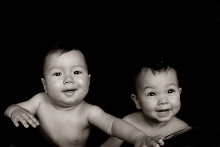
I don't seem to have many photos of Pearl and Louis together - often my attempts come out like this - one child in each corner of the frame, heading in different directions.


However Pearl has recently invented a game that necessitates much close contact. It involves Pearl chasing Louis...


Wrestling him to the ground...


Leaping on him...


And then them both falling about laughing.